Education does not exist in a vacuum and the world our students are growing up in did not emerge from nowhere. This program is a study intensive analyzing the relationship between society, history and education.
Question what you’ve been taught to take for granted.
Decolonial perspectives
Non-Western sources of knowledge
Read the thinkers who challenge the system.
Paulo Freire
Michael Apple
Neil Postman
Jonathan Haidt
Education doesn’t happen in a vacuum. Schools are shaped by history, by power, by economic structures, and by the media environments. Most professional development ignore these contexts entirely.
This program doesn’t.
Over six (6) sessions, participants engage with the foundational ideas of the Social Sciences and trace their implications for curriculum, pedagogy, and the organizational life of schools. The program covers four interconnected areas: Social Sciences and Education, Education and Inequality, Power and Knowledge, and Media, Technology and Society.
It is intellectually serious, practically grounded, and designed for educators who want to think more rigorously about the enterprise they are part of.
It is expected that by the end of this course participants would be able to:
Apply an interdisciplinary lens to analyze and evaluate components of educational contexts.
Trace the diverse social, political, and economic forces that shape educational practices and outcomes.
Examine the relationship between educational systems and dominant political structures.
Critically assess the curriculum, pedagogy, and organization of schools.
SESSION 1
The Sociological Imagination
The Social Sciences: Why does it matter?
Socialization: Schools as Agencies of Socialization
Cultivating the Sociological Imagination
Texts/Scholars: Anthony Giddens, C Wright Mills
SESSION 2
Social Sciences and Education
Modernity and Capitalism
Karl Marx on Capitalism
Capitalism & Education
Texts/Scholars: Ken Morrison
SESSION 3
How we know what we know
Positivism and Empiricism
Scientific Rationality and the Intellectual Iron Cage
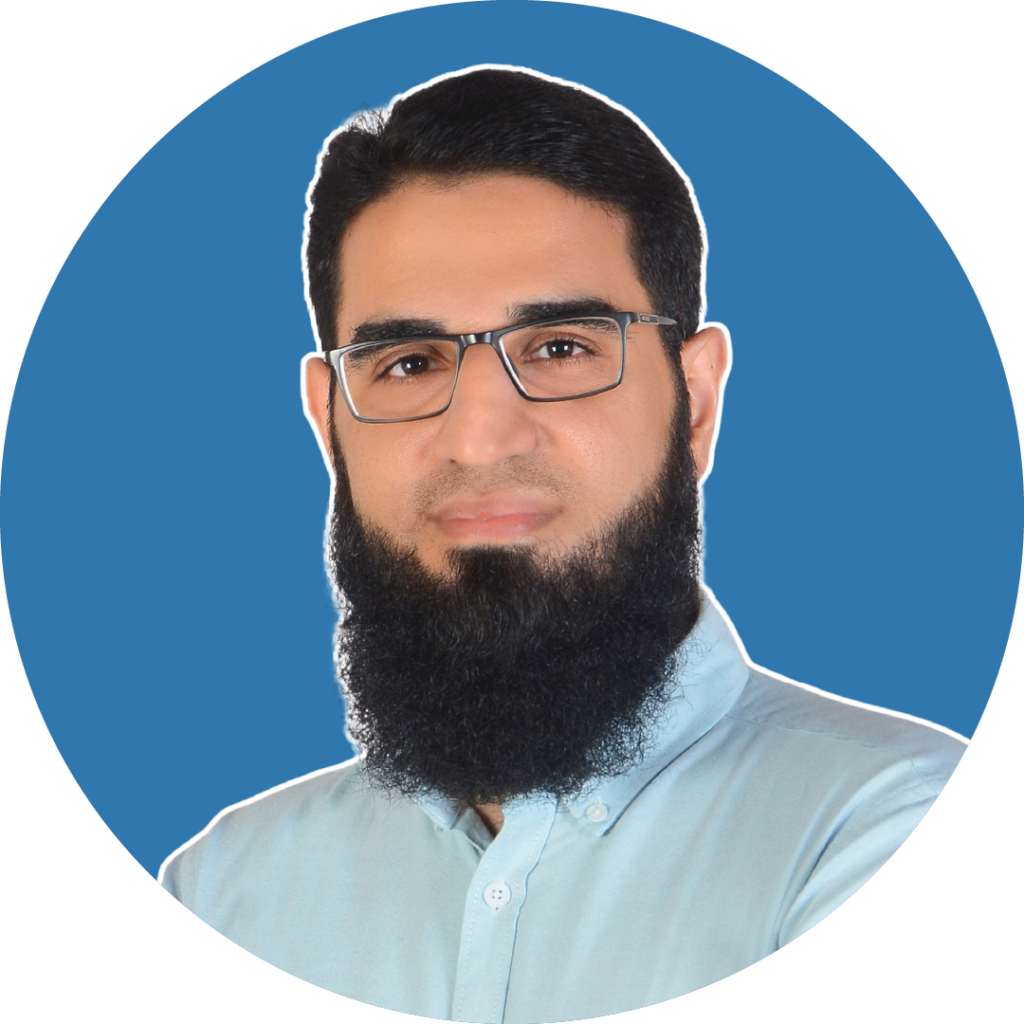
Educational Consultant - Curriculum Design, Educational Leadership and Pedagogy.
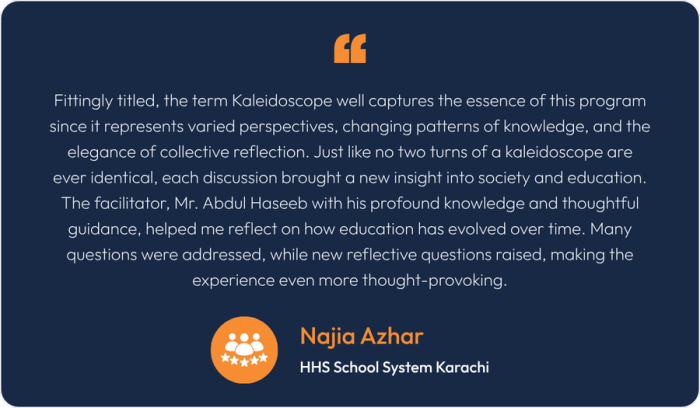
Abdul Haseeb is an experienced educational consultant and practitioner with an extensive background across multiple international contexts. He brings intellectual rigor, warmth, and a commitment to honest inquiry to every session he facilitates.
He holds an MA in International Development from the University of Warwick, UK.
Do I need an academic background in Social Sciences?
Not at all. The program is designed to be accessible to educators without a prior background in the discipline. Texts are introduced with context, and sessions are structured to build understanding progressively.
Is this program relevant to my school context?
Yes, absolutely. The program is deliberately designed to connect Social Science concepts to the realities of schools. Whether you work in a large urban school or a smaller community school, the frameworks here will sharpen how you see your context.
How are sessions delivered?
All sessions are held live online. Sessions are collaborative and interactive, not passive listening. You’ll also have access to resources and notes between sessions via Google Classroom.
Will I receive a certificate?
Yes. Participants who complete the program receive a Certificate of Completion from Edwise.
Ready to think more deeply about education and society?
Register your interest or speak to us to learn more about the Social Sciences for Educators program.